Thursday, July 20, 2017

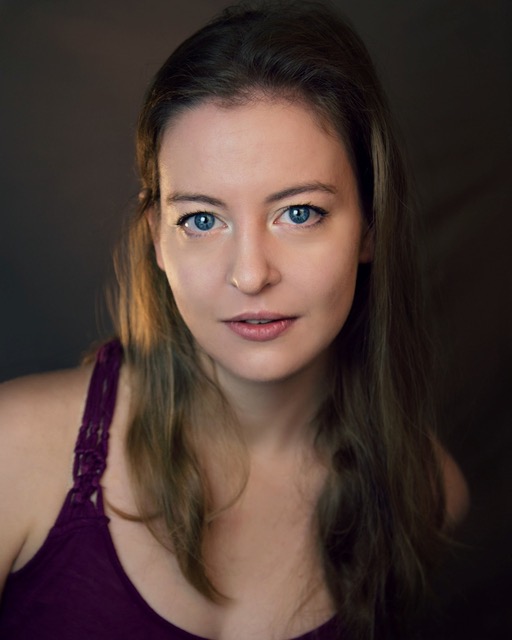
Spotlight On...Brianna Kalisch

Name: Brianna Kalisch

Hometown: Three Lakes WI

Education: The Royal Central School of Speech and Drama (UK)

Favorite Credits: How to choose!? These two stand out very memorable and challenging productions; Seline in A Serious Case of the Fuckits by Anna Jordan (dir Sarah Davy-Hull) Mother Ubu in Ubu Roi at the Garage Theatre Group (dir Micheal Bias)

Why theater?: I feel like it’s always been theatre, I’ve tried to quit a few times and get a “real job” (whatever that means..) but I can’t stay away. And in this age of technology I can’t help but feel that the arts are all the more important; to connect, to remember we are human, to practice empathy. The arts, not just theatre, make a space for that. And I think that’s an important job.

Tell us about The Anthropologist Save The World: The Anthropologist Save The World is a triptych of plays exploring the precarious role of the individual in an age of climate change via the struggles of a smokers’ cessation group, doomsday preppers faced with their moment of truth, and future interactions between human and robot. We are on at the New Ohio as part of the Ice Factory Festival and run July 26th-29th

What inspired you to be a part of The Anthropologists Save The World?: I was part of the first iterations of The Lecture and The Blackout (which make up two pieces of the triptych) back in 2012.  The mission of the Anthropologist is to create a space “where art meets action”. These plays were born out of our quest to discover what the role and responsibility of the individual is when it comes to climate change. The recent political climate (no pun intended) has once again made climate change a hot topic (okay maybe a pun here..) and has us retackling it. Personally, I’ve learned so much from the research and development of this show and am just excited to share it with other people and hopefully ignite the conversation in a new way.

What kind of theater speaks to you? What or who inspires you as an artist?: I’m really happy that these questions are so easy…yikes!  what kind of theatre… what inspires me…new, courageous, unapologetic theatre. I know it can be stressful (understatement) to make work that doesn't necessarily have dollar signs stamped into it but I love and am inspired by theatre that doesn’t play it safe.

If you could work with anyone you’ve yet to work with, who would it be?: So many people I’d love to work with! Very keen to work with The Public Theatre and The Guthrie Theatre along with many others.

What show have you recommended to your friends?: People, Places, & Things by Duncan MacMillan. I saw it in London and its coming to St Ann’s Warehouse in October. Very moving, challenging, and dynamic. Denise Gough is a powerhouse.

Who would play you in a movie about yourself and what would it be called?: I think a “yet-to-be-discovered” talent would play me and I hope it would be her big break. I like that idea. It would be called… Flying Elephants And Other Improbabilities…actually I have no idea, there’s still lots of life to life yet - lord willing!

If you could go back in time and see any play or musical you missed, what would it be?: I would like to go back and see the opening night performance of Cradle Will Rock where due to the WPA temporarily shutting the show down everyone walked a couple miles uptown to a different theatre and the actors performed from the audience with just Marc Blitzstein playing the piano on stage. I’m in love with this story and the ballsy-ness of the artists.

What’s your biggest guilty pleasure?: Chocolate, always.

If you weren’t working in theater, you'd be____: running away with the circus! I’m actually working on it…

What’s up next?: Personally I’m working on developing a show that combines theatre and circus and finding a producer who is equally excited by the idea. Otherwise I’m very available to any opportunities! The Anthropologist are also currently developing a show call This Sinking Island, their first kid/family friendly production set to premiere in October at University Settlement!

For more on The Anthropologists, visit http://www.theanthropologists.org/

Sunday, July 16, 2017

Spotlight On...Johnny Walsh, Qais Essar, and Marina McClure

Name:
Johnny Walsh, Composer & Lyricist
Qais Essar, Co-composer
Marina McClure, Director

Hometown:
JW: Washington, DC
QE: Phoenix, AZ
MM: Brooklyn, NY

Education:
JW: MA in Near & Middle Eastern Studies, Harvard University; BA in History, Harvard University
QE: BA in Political Science, ASU
MM: MFA in Directing, CalArts; BA in Theater, Dartmouth College

Favorite Credits:
MM: I directed Sara Farrington’s Leisure, Lust – a play inspired by the life and work of Edith Wharton – at The Mount, Edith Wharton’s home in Lenox, MA. It was both intimate and impactful. It’s just a home, so there’s no “backstage.” The playwright and I sat in Edith’s bathroom during the shows, listening to the actors bring to life these people that actually inhabited that place. It was a magical experience.
QE: Playing the Kennedy Center. For a kid who grew up in DC and used to go there for field trips, that was a huge deal. In elementary school we’d get dressed up, we’d take buses with all the other kids from across the school district. I vividly remember lining up against the wall of the building. I remember watching the symphony as a kid and looking at the stage, 7 years old, and thinking “that’s what I want to do. That’s where I want to be.” The first time I performed there, it happened to be a field trip day for local school kids. I got there, I saw those kinds lined up. They were on a field trip, and they were there to see me. That blew my mind. Playing there brought everything full circle for me. And I’ve played there three times now, including in May when we performed a concert of music from this show, Tear a Root from the Earth.

Why theater?:
MM: The world is messy and incoherent and beautiful, and theater artists can try to make sense of it. Audiences can come together to be in dialogue with those artists and with that beautiful mess. The immediacy of being in a room, making things with other people. The elements of time and space, bodies and voices, are incredibly compelling. I think of myself like a painter, and those are what I put on my canvas. Because it’s collaborative, and because a director ultimately removes herself from the product, ceding control and handing off the work to others, it is exciting that a part of the work is helping everyone to become their best artist and their best self so they can take the thing up, and offer it to the audience.

Tell us about Tear a Root from the Earth:
JW: This began life as a body of songs I wrote in my trailer while serving as a diplomat in Kandahar, a province in southern Afghanistan, at the height of the American troop surge. I observed such fundamental decency in the average Kandaharis caught in the middle of an awful conflict between the US and the Taliban insurgency. I came to believe that the only political ambition of most Kandaharis was to be left out of it, to live quietly and protect their families, and this was what neither we nor the Taliban could offer them - we each used the means at our disposal to pull families, villages, and tribes to our side of the war. It was difficult to convey this in a diplomatic cable, so I began writing songs after hours to depict it, on a mandolin I had taken out there with me. I've since teamed up with some incredible collaborators, from my band Gramophonic to our theatrical team to the Afghan-American virtuoso Qais Essar, who have helped expand this story into a sweeping epic about one family's journey through 40 years of Afghan history in which global geopolitics repeatedly tear their country and village apart. As large and ambitious as the story has become, it is still at its core the same story of those Kandaharis I knew - always decent, sometime flawed human beings thrust into impossible circumstances, trying to make the best of a conflict that is inextricably tied to Americans and our own choices.

What inspired you to write/direct/create Tear a Root from the Earth?:
QE: The war in Afghanistan is now the longest war in American history, but most Americans (based on my travels around the country) have no idea about the war, or the country, or the people. It’s not even real to them. It’s so far, so detached from their normal lives. It’s almost like Narnia. I tour all over the country, and I am often the first Afghan that people have met. But it’s something that we should address, that we should reckon with. This war is so much a part of modern American life, and it doesn’t seem like America is leaving Afghanistan any time soon. So to be able to put that conflict into a way that we can access it, understand it, grapple with it is incredibly vital. Something like this show (and my own independent work), is about making this far-off, “exotic” place that people have heard of, but have no real idea about, it’s about making Afghanistan real for them. Our countries are intertwined, and will remain intertwined. We need to recognize the people, the country, the situation. The lack of recognition is part of what has allowed it to go on as long as it has. It’s not like Vietnam, where people were invested. Without a draft, there isn’t the same investment in this war, and so people don’t take the time to understand Afghanistan or other conflicts we are engaged, because at the end of the day how much does it impact their lives personally?

What kind of theater speaks to you? What or who inspires you as an artist?:
MM: Theater that is grappling with important societal questions is inspiring. When I go to the theater, I want to feel like I am in conversation with the artists who created it. I want to see playwrights, composers, directors, and performers wrestle with a question they have relating to how we live, whether today or in the past. There are wonderful, visionary female directors who are doing this: Rachel Chavkin, Rebecca Taichman, Phyllida Lloyd, Katie Mitchell, Julie Taymor. I come from an experimental background with training at CalArts, so I also love work by the Wooster Group, Robert Wilson, Anne Bogart.
JW: The greatest musicians can inhabit a character for the 3 minutes it takes to perform a song. Springsteen can become a factory worker who is down to his last dime. Little Richard is an 18-year old meeting a girl at a sock hop. Even without staging, with just the music, their performance is enough to transform the situation in a way the written word alone could not. Musical theater lets you expand on that phenomenon, letting our performers inhabit characters over the whole night, to tell a story that the music alone cannot.
QE: The kind of art that interests me lately makes a statement that reflects the current geopolitical climate and where we are with civil rights. I feel that we are at one of those times in history when we will look back and identify it as a significant moment, just as we did with the Civil Rights Movement of the 1960s. A lot of that bigotry has swelled up again and now we are facing a different set of issues – not simply a black/white issue – but these are trying times. Art gives you a platform, it gives you an audience. I like seeing art that is reflective of what’s going on and that is trying to bring awareness of certain issues in another medium.

If you could work with anyone you’ve yet to work with, who would it be?:
JW: Emmy Lou Harris. In all the music world, she is the most perfect interpreter of traditional American forms (folk, bluegrass, country), and hers is my single favorite voice. I’d love to work with her over any other musician.
MM: Sia uses fascinating storytelling methods in her videos and concerts that really illuminate the emotion behind her music while also building a feeling in the audience. It is transporting and vibrant and strong.
QE: I’d really love to work with Devendra Banhart. He was at the forefront of the new wave of American folk in the early 2000s, and he uses his music as a kind of inter-cultural dialogue. Oh, and Jimmy Page. Always. Every week, I ask God to not let Jimmy Page die before I can meet him.

What show have you recommended to your friends?:
JW: Hadestown blew my mind. I had literal tears because the music was just so good. It totally hung together as a musical, but it was also a perfect use of natural, authentic instruments and the tropes of country music to tell a story. Wild romps with 12 acoustic instruments, tender moments with songs down to a whisper. Incredible. We approach that problem set very differently, but it was inspirational to see how successful they were able to be at telling a powerful story whose subject matter had nothing to do with the American south, or traditional American forms or characters, but they could use that musical form to tell that story so convincingly and emotionally.
MM: Indecent. It’s exciting how you can feel the personal relationship to the material of the creators and artists involved. It unabashedly takes a point of view. It deals with the impact of politics on culture, and exposes some of the ugly bits of American history in a very artful way. It doesn’t shy away from emotion in its narrative and visual storytelling. I’m thrilled that it got an extended run – everyone should go see it.
QE: Angel Olsen is amazing live. Check her out.

Who would play you in a movie about yourself and what would it be called?:
QE: Russell Brand, obviously. He’d have to wear a nose prosthetic to play me. It would have some sad title. “Gone Too Soon.” Even if I live to be 99, I still won’t be ready.

If you could go back in time and see any play or musical you missed, what would it be?:
MM: The original West Side Story on Broadway. And early Wooster Group, from the 1970s.
JW: The Sun Studio Road Show that toured the country in 1956-57. Elvis, Jerry Lee Lewis, Johnny Cash, Carl Perkins. This was before Elvis went into the Army, before the plane crash that killed Buddy Holly.
QE: Led Zeppelin at Madison Square Garden in 1973. They played there three nights in a row, filming "The Song Remains The Same."

What’s your biggest guilty pleasure?:
JW: Does 90s hip hop count? That’s all I’m listening to right now.
MM: I’ll see anything with puppets. I don’t care what it is.
QE: "Ugly Betty" reruns on Netflix.

If you weren’t working in theater, you would be _____?:
MM: An architect. One of the things I love about theater is its ephemerality – you have to be present, or you’ll miss it. Architecture is interesting because it’s communicating with people across time.
JW: This project is my answer to that question. I’ve lived a life in government service, diplomacy, and policy making. My first love was always music, and now I’m indulging that in a serious way with serious people, and having an absolute blast. It also makes me not want to go back to my day job at the State Department, working on Afghanistan, although I do love that job.
QE: Librarian. I like books, and would love being able to make people whisper when talking to me.

What’s up next?:
QE: I composed music for The Breadwinner, produced by Angelina Jolie. As far as I know it’s the first animated feature film about Afghanistan, and it should be coming out toward the end of this year. I also scored another animated film in Australia that should be out later this year. And I’m always writing new music. Look for a new album this fall. Then a European tour in the spring. And hopefully more interfaith work. I’m doing some church shows, which is something I really like to do.
MM: I’ll be directing Fill Fill Fill Fill Fill Fill Fill by Steph del Rosso at the Flea early next year. And Sara Farrington’s Leisure Lust at Art House Productions in New Jersey this fall.
JW:  Most immediately, I still have a day job as the head of the team at the State Department working to broker a peace process for Afghanistan. That wonderful country so desperately needs and deserves peace and it means the world to me to try to help. At the same time, we hope to keep putting on Tear a Root from the Earth in ever-more-finished form. There is new music we want to present, and we still have not staged the whole piece.  I hope and believe it has a long life ahead of it.

For more on Tear a Root from the Earth, visit www.teararoot.com or www.facebook.com/teararoot. For more on Qais, visit www.therabab.com. For more on Marina, visit www.marinamcclure.com

Tuesday, May 30, 2017

Spotlight On...Kim Weild

Name: Kim Weild

Hometown: New York City

Education: MFA Columbia University, BFA-NYU Tisch School of the Arts

Favorite Credits: All of them

Why theater?: It saves lives.

Tell us about Soot and Spit: It is a celebration of the perseverance of the human spirit, of James Castle’s life, his determination to make himself into an artist despite how others viewed him. Like all artists Castle made art because he needed to make art. Born profoundly deaf, he never learned to read, write, sign or speak but his art was his language -  a beautiful, rich, haunting and powerful language evoking longing, loneliness, humor and silence.  It is also the only play that Chuck has explicitly said that he has written that is about disability. We have assembled a truly remarkable group of artists - from actors, to musicians, artisans, crew and more all of whom are helping to bring Castle’s world to life through bluegrass music inspired by John Hartford (a self-taught fiddle player), dancing, American Sign Language and multi-media projections of over 150 of artworks by Castle himself. What we hope is that Soot and Spit will enable its audience to experience the “other”- and rejoice in the unquenchable creativity of the human spirit.

What inspired you to direct Soot and Spit: To me at its core Soot and Spit is about the intrinsic nobility, tenacity and perseverance of the human spirit and it is also about the special bond I share with my brother Jamie. Born five years before me, and profoundly deaf since birth, he himself communicated through drawing and only came to learn American Sign Language later in life. Having him as my brother has been one of my greatest blessings. He has taught me much about love, patience, kindness, compassion, courage, tenacity, true communication, the value of silence - how to feel and hear with my eyes, empathy and perhaps above all - Grace. He has taught me that each of us is deeply original and every day, no matter how hard, we must look beyond the fear of differences in order to connect.

What kind of theater speaks to you? What or who inspires you as an artist?: Bold, nuanced, honest, physical theater that virtuosically brings together all the elements of theater in order to tell a great story, create a unique event. Theater that challenges, asks me to lean in, to listen closely, to think. Theater that emotionally engages me. Those who have endeavored and survived to tell the tale. Seriously far too many to list but in theater, the immediate ones that come to mind: Anne Bogart, Arianne Mnouchkine, Pina Bausch, Joan Littlewood, Paul Sills.

If you could work with anyone you’ve yet to work with, who would it be?: Philip Glass

What show have you recommended to your friends?: Oslo

If you could go back in time and see any play or musical you missed, what would it be?: Julie Andrews in My Fair Lady

What’s your biggest guilty pleasure?: Binge watching "Billions" on Showtime

If you weren’t working in theater, you would be _____?: An astronaut

What’s up next?: American Moor with Keith Hamilton Cobb at the Boston Center for the Arts

For more on Soot and Spit, visit www.newohiotheatre.org and www.ourvoicestheater.com. For more on Kim, visit www.kimweild.com

Wednesday, March 1, 2017

Review: Petra' Love Breakdown

By Michael Block 

Love can make a person go crazy. To the point of an emotional breakdown. Just ask the titular character in Rainer Werner Fassbinder's The Bitter Tears of Petra von Kant. Produced by Third Space at The New Ohio, this dark comedy is a wild ride that will leave you on edge, especially if there's an inkling you can relate and latch onto.
The Bitter Tears of Petra von Kant has a storied history. First a play then a film and now back on stage, Rainer Werner Fassbinder's piece explores the explosive relationships between Petra, a prominent fashion designer, and the various women in her life. Layered with manic chaos and mental breakdowns, Petra finds a deep love and admiration for Karin, a youthful brat of a model trapped in a loveless marriage. Offering her full attention, intimacy, and any object she desires, Petra does whatever it takes to keep Karin with her despite her ill treatment toward Petra. Using her for her connections in the fashion world and her endless wealth, Karin flees when she learns her husband wants her back, thrusting Petra into a downward spiral of emotion. Despite being an established text, there is a new ending unfamiliar to the original play or film. And it packs quite a punch, solidifying this as Marlene's story. The Bitter Tears of Petra von Kant is all about the help. Despite having literally no lines, Marlene is by far the most active and revealing of all characters in the play. Director Benjamin Viertel ensured this by highlighting her when she was not physically in the moment but on the outskirts of the playing space. Tracking Marlene's journey through love and admiration, the devoted servant is emotionally beaten down, bringing one style of comedy into the piece. But it's juxtaposed to some realism that seems to have no place in this world. And much of this is due to pacing. This is comedy and comedy needs to be fast. The first half of the show is anything but. Fassbinder's text, translated by David Tushingham, is problematic but Viertel had a plethora of missed opportunities to infuse a genuine and consistent style. The piece is surrealistic by nature so not matching this in vision causes a disconnect. But when Viertel does embrace the style, the play is at its best. Viertel has asked scenic designer Bryce Cutler to give him a world of challenges when it came to the set. For a large portion of the show, the only real seating location in the main playing space was the pink plush sheets, aslo known as the ground. Petra's fortress is visually unique and stunning but it can be a trap for Viertel and his staging. As a whole, the direction was a bit clunky and unhinged. Keeping the sides visible, which happen to be the home of incoming props, it allowed for Marlene to have her active break moments capture more of her story. There's a give and take when it comes artistic choices. To see Marlene, the lights must be present. As we see at numerous points, when lighting designer Mary Ellen Stebbins removes those side lights, she provides a stunning landscape of color, introducing a rainbow of colors, offering a different color mood for each beat of Petra's breakdown. Costumes can make a show and Emily Chalmers' design was nothing short of a fashion show. Each outfit matched the personalities of the individuals.
It may be a stretch but the dynamic between Petra and Marlene was reminiscent of Norma and Max. In a way, this was Sunset Boulevard for fashion. But the Norma wasn't the focus in this equation. As Marlene, Alex Spieth gave an outstanding performance. You might have been worried that Spieth was going to hurt herself on the fabric as she ran herself ramped, but her commedia told a complete story. Opposite her, Caroline Gombe's erratic performance needed more control. Petra is a complex person but when there's a lack of arc in her madness, it becomes predictable. Taking on the life of the privileged and undeserving, Betsey Brown made Karin the antagonist you wanted to crumble. The hierarchy of dislike from Karin to Petra allowed the admiration of Marlene to pop.
The Bitter Tears of Petra von Kant is a wild trip through madness that goes off the rails. And it’s a shame because there’s so much good inside.

Saturday, February 4, 2017

Review: Missed the Mark

By Michael Block

What if the story we know is not the story that happened? In Flux Theatre Ensemble’s Marian, or the True Tale of Robin Hood, Adam Szymkowicz takes the playfully colorful story of Robin Hood and twists it in a manner that it’s no longer as straight as an arrow. In Szymkowicz’s version, the titular character is, spoiler alert, actually Robin Hood. The comedy tries to shoot down gender norms through the lens of a well-known story but it’s anything but a bullseye.
Marian, or the True Tale of Robin Hood follows Marian as she lives a double life as the heroic outlaw Robin Hood, stealing from the rich and giving to the poor. Though an explanation of her intentions is never really solidified in the text, Marian, as Robin, leads her band of Merry People through Nottingham and Sherwood Forest on a crusade of righteousness. On the page, the text leaps off as a raunchy comedy. On the stage, this production was anything but. Our modern lexicon of Robin Hood is bogged down by Hollywood adaptation. Between Disney’s animated film where animals take on the roles and the action adventure versions where Robin gets played by people like Kevin Costner and Russell Crowe. When it comes to Robin Hood and comedy, no one quite does it like Mel Brooks. But Adam Szymkowicz sure tries! The thing about Marian is it could be hilarious while still exploring modern gender theory but the execution of this particular production had woes when it came to tonal consistency. Director Kelly O’Donnell seemed to struggle with the overall execution. When the audience strains for laughs in a comedy, something misfired. The script is silly. To allow the implausibility of the plot, the characters had to be dumbed down and boy were they dumb. But O’Donnell asked her company to find far too much truth and honesty that it didn’t match. With medieval sensibilities exploring modern themes, teetering the line between comedy and sincerity caused some moments to become borderline uncomfortable. There were some beats that were played dramatically that didn’t quite have the dialogue to support it.
The director’s vision is all about how they interpret the material. O’Donnell was at least consistent in how she approached the story. Aside from avoiding campiness, O’Donnell had some hurdles in her way. Comedy needs to be fast. Marian was anything but. And it may have much to do with O’Donnell’s trouble staging. Visually, Willy Lowry’s scenic design was Medieval charming. Extending the design into the audience allowed the superfluous narration to feel warranted. But for O’Donnell’s purposes, the set was a detriment. For a story that moves from location to location, the scenic elements were clunky, often causing the momentum to drop. Sure, the royal banners helped to spell out location but they didn’t need to be flipped in every scene shift. Seconds count! Keeping there would have been just fine. Overall, costume designer Izzy Fields nailed the period with style and grace. The color pallet was muted yet had flash. But there was one integral costume that floundered. To put it bluntly, without knowing what you were seeing, you might confuse Robin Hood for Peter Pan. With the nature of the piece, moving in and out of disguise and some of the fight choreography, keeping the archer’s hat on is important. But the elastic or string keeping it in place was a bit distracting. As mentioned before, the characters needed to be pretty witless to know that Marian and Robin Hood are not one in the same. Not having some sort of goatee or facial hair was a missed opportunity. It’s a little thing but it had a big impact.
This gender-bending Robin Hood tale is funny. There’s proof of that. The sole actor who seemed to understand the tone of Szymkowicz’s writing was the incomparable Kevin R. Free as Prince John. Free had the audience in stitches. And rightly so. Comedy seems to come easy to him. He created a character all of his own that made you wish there was a spin-off in the works. His classic comedic sensibility was the highlight of the play. With that being said, the rest of the company needed to match Free. Jack Horton Gilbert as Little John, Mike Mihm doubling as Friar Tuck and Sheriff of Nottingham, and T. Thompson as Will Scarlett had some great moments, bringing fun and laughs. Taking on the narrator and the straight role in the piece, Jessica Angleskhan as Alanna Dale was striking. Alanna may not have been the focal character but Angleskhan made you wish she was. Leading a merry band of robbers is no easy feat. Impersonating the most infamous archer in the Sherwood Forest while having a huge secret while leading a merry band of robbers seems like a tough task. But the reality is that there is extraordinary potential for comedy. Unfortunately Becky Byers as Marian slash Robin Hood felt miscast. Her comedic chops didn’t seem to land anywhere near the target. Robin Hood is a powerful presence but if the biggest joke was the feistiness despite her small stature compared to the rest of the company, then the payoff wasn’t there. Byers is a strong performer but this role seemed like a strain.
The concept of Marian, or the True Tale of Robin Hood is quite promising. But when the comedic execution didn’t match the map within the text, the production fell flat. Not every show can be a winner. Sadly, Flux Theatre Ensemble didn’t have a champion here.

Monday, January 9, 2017

Review: The Holden Inside

By Michael Block

Sometimes others' actions can take great toll on an individual. In Holden, J.D. Salinger can't quite seem to follow up the success of "The Catcher in the Rye" after he's haunted by the actions of some infamous assassins. Written and directed by Anisa George, George & Co's production is a surrealist fever dream to say the least.
The play begins with a trio of men in a rustic cabin preparing for another to awake and write. The stakes are high as the man needs to write a follow up to his greatest success. That success just happens to be "The Catcher in the Rye." Chapman, Hinckley, and Zev rally Salinger around his typewriter but can't get him to finish his follow up. The catch is this trio isn’t really there. Salinger is haunted by the spirits of assassins who obsessed over "The Catcher in the Rye", two of whom possessed it after they shot John Lennon and Ronald Reagan. Holden is a fantastically dark exploration of the internal search for self through the lens of violence. Using notable names, George and her company have allowed an instant way in for the audience. The extension thankfully never feels gimmicky when identities are revealed. Whether you know the complete history of the individuals or not, knowing just the big highlights, such as who killed, or tried to kill, who crafts a direct narrative that prevents George from needing to include extensive exposition. But it's the pair of characters that do not have a notable identity that are the big mysteries of Holden. And in turn, they are intriguing. Who is this Zev of the future and why is this little girl meandering around Salinger's cabin? We get a grand reveal at the end with the girl but Zev's identity is a little more uncertain. Zev represents a person and idea of what has yet to come. Someone who will be. But at the start, Mark David Chapman and John Hinckley ask how he got there and finally learn why he is there. But is Zev's presence consistent with the rules of the world? Is it a stronger choice to have Zev go on the journey to find himself and realize who he is by giving him a specific horrific act? No matter what, George and her company have set up a bold new world that is just mystifying as it is terrifying.
photo courtesy of plate3.com
With Anisa George serving as the creator and director, Holden was a mark of a singular vision. For the most part, her consistency in creating her world followed through but there were moments you wished a trimming or two would occur. Despite a brisk running time, Holden does not move along swiftly. Holden lived heavily in silence. It was mostly earned and can be completely earned should the trimming occur. As it stands now, the balance is off kilter causing the piece to be unintentionally slow moving, even during those bursts of excitement. George created a world that was physically intricate and strongly developed. The characters were well lived in. They moved independently of one another yet had a cohesive bond. To create Salinger’s hideaway writing bunker, scenic designer Nick Benacerraf used logs to create walls with just the essentials in the way of furniture. It had an earthy, rustic feel that brought out a particular eeriness. Lighting designer Seth Reiser’s mesmerizing design was evocative. Through the use of vibrant color and darkness, the uneasy mood raised the stakes through its intensity as was matched with Alex Bechtel’s sound design. The costumes from Rebecca Kanach rightly kept the time and place in question. Each outfit was reminiscent of their counterpart yet still had individuality. Though, if being hyper critical, putting Zev in jean shorts seemed a bit strange.
It takes immense talent and skill to bring humanity into two people deemed as monsters by society. Jaime Maseda and Scott R. Sheppard as Chapman and Hinckley painted the pair with such a firm stroke that empathy for their situation was immediate. A sense of understanding resonated. Matteo Scammell as Zev threw himself about with the greatest of ease. Scammell gave Zev a resounding egotism that helped to bring out the kinder sides of Chapman and Hinckley.
Whether Anisa George and her ensemble shattered your thoughts or you had to dig a bit deeper for it, the message within is unquestionable. Holden’s disturbing venture through violence is an ambitious conceit. “The Catcher in the Rye” doesn’t directly lead to violence but the discussion on what the character has done to people’s psyche is the draw of Holden.

Wednesday, December 28, 2016

Review: Scrooge Askew, For His Own Good

By Ed Malin

Blessed Unrest, that experimental theater company known for choreography and classics, is now staging A Christmas Carol.  The production runs through December 31st at the New Ohio.  Adapted by Matt Opatrny from the novel by Charles Dickens, this poignant show is both familiar and, thanks to Jessica Burr’s direction and choreography, a step beyond.  On a mostly bare stage, with things such as doors carried on and off by the cast between scenes, we see Ebenezer Scrooge have something like a “4-D” experience involving spirits, noise, juggling, perspective shift, stilts, and much, much more.
In Victorian London, the famous Scrooge (J. Stephen Brantley) is a tall, always-scowling, workaholic businessman.  For reasons that will become clear later, he does not have the Christmas spirit. He laments that he will be giving his employee, Bob Cratchit (Nathan Richard Wagner) one paid holiday this year.  He tells the local bleeding heart charity folks (Claire Fort, Tatyana Kot) that the prisons and poorhouses should be sufficient to help the underprivileged.  His nephew, Fred (Becca Schneider), makes the usual, hotly resisted yearly invitation for Scrooge to join them on Christmas.  All of this comes from the original tale.  However, Blessed Unrest work their magic to show us how Scrooge came to be the kind of person who runs away from his pain by working, sleeping, and over again.  When Scrooge goes home, the ensemble rotate a door and have him trudge up multiple flights of creaky stairs, all on the flat stage.  Once in bed, the ten-foot tall apparition of his deceased partner, Marley (Joshua Wynter) shares a happy moment with Scrooge—finally, someone who understands what it means to work all the time—before telling him to expect visits from the Spirits of Christmas Past, Present and Future. These flights of fancy reveal great moments of happiness with late friends and lovers and even Scrooge's beloved sister, which, when lost, drive Scrooge to live only to work.  The best thing Scrooge can do is to help Cratchit’s son, Tim (Becca Schneider) to live long enough to have happy memories of his own.
While long passages of the original tale abound, the deft ensemble does an outstanding job of using contemporary speech to get the audience to connect to isolated Ebenezer.  Holiday schmaltz-pop is played on the ukulele.  At one point, the characters ask each other what kind of insect a “humbug” is. And then there’s the poultry delivery person (Nathan Richard Wagner), a Cockney’s Cockney, whom, sadly, no one can understand.  Dining scenes are absolutely brilliant.  The audience’s bird’s-eye view is achieved by having the actors recline on stage around a vertically-oriented table, drinking out of cups with magnetic bottoms.   Constant stage activity, cheerful chucking of apples, much joyful dancing and the occasional “Happy Hanukkah” greeting continually make this production a joy to watch.

Thursday, December 15, 2016

Review: A Play of the Past for the Present

By Michael Block

They say history repeats itself. Fads and trends may have their heyday but they’ll inevitably return in some fashion. But then there are moments when something you may believe is fresh isn’t really. It’s been there for quite some time. Something just bolstered it to the mainstream. The drag, queer, and trans culture and community has a rich history. In today’s age of RuPaul’s Drag Race, that history, equipped with lingo and all, has made a reemergence. In Pia Scala-Zankel’s blisteringyl authentic Street Children, we are transported to a time when being different was not only looked down upon, it was downright dangerous. But the power of family can lift the lowest of spirits.
Presented by Vertigo Theater Co. at the New Ohio, Street Children captures the lives of the denizens of the lower Hudson Piers in 1988. The inciting incident is the untimely death of the beloved Gina. Angela, Jamie, and Terrence grieve for their fallen sister but no one said grieving is easy. Time doesn’t’ stand still as the trio must find a way to move on in a world that challenges them. Despite being derivative of a time, there was a whole sense of truth and honesty in Scala-Zankel’s words. Street Children never reaches camp as it is pure and raw depicting the dangerous world of sex, drugs, and morality in the late 80s LGBTQ scene. Street Children is one of those plays that is bound to have a prosperous future. It’s a story that needs to be told and heard. And with a future in mind, the script can be even tighter and even stronger. With the vantage of three stories in aftermath, it’s ironic that the flashbacks were the strongest beats. It brought out an exuberant amount of fire in the characters. The past truly informs the present. Though it’s the end of the play, seeing Gina and Jamie’s first ever interaction was beautiful. Seeing that moment for Angela and Terrence is particularly desired. It would help Scala-Zankel strengthen the trio’s arcs. As it stands now, Jamie’s story has a clear beginning middle and end. The other two have a middle and an end. Aside from the fallen angel, the most captivating character journey was that of Angela. The backstory and subsequent familiar future has a tight grip on your heart. But, without spoiling too much, the unfortunate event that Angela faces in her downfall is more than heartbreaking. It hits harder because it feels far too early in the play’s voyage. Pushing it back just a tad further may be beneficial with the way flashbacks are incorporated. Scala-Zankel gives us glimpses of the tight-nit families and subculture that formed in this time. And dramaturgically, it’s a remarkable feat.
photo by Ted Alcorn
Director Jenna Worsham captured the time with great ease. The ambiance was set as the audience comes in. Though, if you’re not a fan of herbal cigarettes, prepare to smell them for quite some time. Worsham established a stunning physical lexicon for her ensemble. This world moved fluidly. From sashaying through the ruins to the vocabulary of the vogue, Worsham’s ensemble was united. Where Worsham could have done more was utilizing the ensemble in a more purposeful manner. Wafting in the wings is fine but it teetered on high school musical extra cast meandering. By adding figures in the shadows, it heightened the atmosphere but it needed to be felt by the primary focal characters. Worsham took reality into the forefront of her direction. What could have been stronger was the realism when it came to prop use. While it could have been due to a boom box that no longer served its purpose, when everything is riddled in reality, not physically pushing the buttons or playing with the tape deck takes you out for those many split seconds. Though not perfectly real, scenic designer Angelica Borrero transported the audience into the seedy graffiti-filled piers of the past. Utilizing the outskirts of The New Ohio allowed the great expanse to rightly overwhelm the intimacy of the story. From neon to “Dynasty” shoulder pads, costume designer Bernat Buscato brought the best, and worst, of the decade to the stage. Lighting designer Kate Bashore didn’t quite capture time and location as well as she could have but the transitions were tight and sharp. Daniel Melnick provided an incredible sound design, navigating reality.
There were some exemplary performances within the cast of Street Children. Far and away, the performance of the night belongs to JP Moraga as Angela. Moraga’s honesty and gravity in balancing the varied lives of Angela was illuminating. Angela is a complex persona and Moraga found a complete character within. As the angelic keeper of the beats Gina, Mj Rodriguez was radiant. She gave a captivating performance that left you wanting more Gina material. The way she carried herself onstage was evocative of a star on the rise. Taking on the ingénue role, Eve Lindley’s Jamie was simply stated. Like a delicate porcelain doll, Lindley found grace in Jamie without feeling false. Victor Almanzar as Terrence was hit or miss. In a way, his characterization felt closer to caricature. The excessive bursts of fury, whether written in or an acting choice, defied a complete story arc for Terrence.
There are uninformed people out there who didn’t know the history of the community. RuPaul didn’t invent the catchphrases and culture we’ve come to champion. There is a tremendous amount of lost souls and determined warriors who have stories that helped shape the bright future. But in today’s America, the struggle of acceptance in our society is ever present. Street Children is a necessary story that does more than bring awareness of a past. It’s a teaching tool that can inform our future.

Friday, June 3, 2016

Review: The Mistakes We Make

by Michael Block

Let's just get it out of the way now. Kiss It, Make It Better by Erika Phoebus, produced by Theatre 4the People, is a tale of two acts. Act I is the example of brilliant writing and storytelling. Act II is a completely different and disappointing play. And it's a shame because Kiss It, Make It Better could have been exceptional. But we'll get to that in a bit.
Kiss It, Make It Better follows the complex relationship between Nadia and Ty, two wounded individuals who run away from their problems. Spanning more than a decade, Phoebus’ play is a dangerous piece that treads deep water. Ultimately, this play is a highlight reel of teen hardship. The way it is portrayed in the first act is promising. But when Act II takes a turn for the psychological and not always real, Phoebus seems to lose control of her play. Act II lacks the spark Act I has and needs to be trimmed immensely. This is a coming of age story, yes, but there are times as if scenes were lifted straight from Spring Awakening. Starting in Act I, we watch a pair of friends grow up before our eyes. As their relationship moves from friends to something more intimate. But as they learn about themselves and the world, they find themselves in situations that alter the course of their future, both individually and as a pair. This coming of age story is accessible and universal. But by the second act, Phoebus explores a new style that does not even come close to being as successful as her poignant first act. In Act II, the duo run away from the world and their problems and make a home at the fairgrounds. They try to play pretend as adults but the reality is, they just don’t know how. The action becomes very repetitive and sadly the characters don’t feel as genuine as they had before. Phoebus plays with some not so realistic elements in her storytelling. And there’s even an ill-timed monologue from Nadia’s mother. Sure, the characters are the same but the cohesiveness between acts is just not there. What should be a winning script suddenly has too much happening that sacrifices the integrity.
photo by Yvonne Alloway
Despite the drastic contrast of the script, Kiss It, Make It Better featured visionary direction. Director Isaac Byrne brought together a technically ambitious concept to lift Phoebus’ text. Was the execution perfect? Absolutely not. But you have to give this team a have for what they tried to pull off. At the forefront of the concept was the structure designed by Joshua Rose. The first side was a series of three sets of scaffolding each with white clip-on beams. It was a stretch but it resembled a roller coaster. On the other side was the front porch of a house, working and window included. The company used Rose’s set like a jungle gym. Byrne utilized it to the max. When you first walk into The New Ohio Theater and see the structure against Rose’s beautifully intense blue lights, it’s sensational. But as the play moved on, the set became cumbersome. Whether they weren’t attached well or if they were not imagined fully, the white clip on wood pieces on the scaffolding were a massive hindrance. To start, the structure simply rotated. But through the magic of theater, it came apart. When did the manipulation of the set happen? Quite possibly at the worst time ever. There are many layers to make this effect look and sound good without putting an immediate pause into the show. Byrne had his two-piece acting crew dismantle the set during the climatic party scene. Because the structure is metal, it’s going to be loud so a party sounds like a good point? Right? Well to mask the dismantlement, the music was amplified. But what was happening textually at this moment? The most important part of Nadia’s narrative. At this point Nadia and her old older babysitter are getting intimate which will lead into sexual experience that will alter her entire life. Though inexperienced, Nadia made decisions that lead up this encounter. But because of the environment of the set, sound, and staging, it’s virtually impossible to hear Nadia demand Bradley to stop. This essential line could virtually create a new narrative going forward with the play. This is a prime example of ambition thwarting a production. Beyond this moment, Byrne was quite in tune of his direction. Tempo played an integral part in Byrne’s staging. He kept the momentum moving until important beats where the pacing slowed down. When it came to projections, Maxwell Bowman’s well-conceived design was lost due to the lack of solid canvas. It was hard to depict the specificity. But when it was clear and visible, you could see the artistry in Bowman’s work. Kiss It, Make It Better is an example of how a soundscape and score can enhance and influence the atmosphere of a production. Andy Evan Cohen’s design was an incredible use of sound.
This was essentially a two-hander with some additional bodies. Brian Miskell as Ty embraced the youthfulness and candor of his character. Miskell was believable through his range of age. When it came to Nadia, Erika Phoebus may have been better suited remaining in the playwright’s seat. It could have helped her hear the woes of the second act. But one of her weaker moments is when she seemed to forget about stakes in some insanely high stake situations, notably Ty's overdose. There was no scream, no panic. Just a shake. There’s a sense of dropping complete believability when it comes to theater but the casting of Amy Higgs felt odd, especially as she appeared a good decade younger than her on-stage daughter.
If Kiss It, Make It Better ended after Act I, it would be triumphant. But Act II ruined the strong momentum. And it’s a shame because Theatre 4the People almost had a smash on their hands. So close yet so far.

Wednesday, May 18, 2016

Spotlight On...Erika Phoebus

Name: Erika Phoebus

Hometown: Glen Burnie, MD

Education: University of Colorado, Boulder

Favorite Credits: I workshopped this new musical in college called Knock Out by Raechel Sherwood. It was a commentary about body expectations put on adolescent girls. It may not be a head turning credit but I’ve never felt so strongly about something I was working on, other than my own pieces.

Why theater?: Connection. Communication. The opportunity to really look at the world we live in. It’s much easier to reach people when they are sitting in a dark room being entertained. It’s an exchange, everyone in that room is affecting one another on some level. That’s pretty special. There is a chaotic stillness, or a still chaos, that simmers out of the theater. I think it’s both of those things actually. I desperately need that in my life, that grounded pulse.

Tell us about Kiss It, Make It Better: Kiss It, Make It Better is about childhood best friends who run away to live in an abandoned fairground in order to create a safe place for coping and healing after they are both assaulted in very different ways. It has a lot of colors that hint at a Peter Pan and Wendy story, as we watch these adolescents run down all the confusing avenues of puberty while dealing with the aftermath of trauma. It’s about finding a way to communicate with each other when you weren’t given any sort of genuine language. It’s about making your own rules and deciding for yourself what is good and healthy for you and how that lives in a relationship.

What inspired you to write Kiss It, Make It Better?: I started realizing more and more that the majority of my friends had some kind of experience that lacked consent. I heard how it affected their lives and the inner workings of their relationships. I watched the way their reality shifted. I noticed the altercations of my own reality. I wanted to try to humanize life after sexual assault and the journey of discovering your sexuality.

What kind of theater speaks to you? What or who inspires you as an artist?: Theater that tells stories I didn’t realize I needed to hear. I love stories that remind me how naive I am. I so desperately want to learn about human experiences that aren’t my own. Hearts get too hard without that. As far as inspiration goes, anything that keeps me honest and anyone who approaches life with a sense of reckless abandonment. I’m inspired by anything that gets my brain to shut up, whether that’s poetry or my kitten or drinking wine with my mama.

If you could work with anyone you’ve yet to work with, who would it be?: Anne Kauffman, Rajiv Joseph, Sam Gold, Leigh Silverman, Rachel Chavkin, there’s too much brilliance out there to pick just one.

What show have you recommended to your friends?: Fun Home and Curious Incident are definitely my Broadway choices (unless of course you can get in to see Hamilton then uhh...go). Years later I still think about Smoke by Kim Davies that went up at The Flea. I also still think about The Honeycomb Trilogy by Mac Rogers on an embarrassingly regular basis.

Who would play you in a movie about yourself and what would it be called?: Alison Pill. It would probably be called “It’s Hard to See in this Darth Vader Helmet.” When I was little, our basement was Star Wars themed and my dad had a Darth Vader replica helmet that we weren’t technically allowed to play with... and I would ALWAYS trip or run into things when I was wearing it. I think that is the PERFECT symbolism for my life. Clumsily doing things I’m not supposed to and just, you know, hoping I don’t break anything.

If you could go back in time and see any play or musical you missed, what would it be?: Both the original production and the revival of Top Girls, back to back. I would really love to experience the evolution of that piece.

What’s your biggest guilty pleasure?: SoulCycle

If you weren’t working in theater, you would be _____?: Some kind of female rights advocacy. Or I’d probably be in the field of research/therapy focusing on either mental illness or trauma.

What’s up next?: I just started writing a play based on Khutulun, the female warrior. Theatre 4the People is also workshopping a few new plays right now with some other young playwrights that I’ve got my hands in. I’m hoping Kiss It, Make It Better has a future as well.

Thursday, May 12, 2016

Spotlight On...Isaac Byrne

Name: Isaac Byrne

Hometown: Granbury Texas

Education: BA in English, Schreiner University

Favorite Credits: The Other Mozart is probably the most successful and the most important show I've been blessed to be a part of, “In Vestments” was probably the most challenging, To Nineveh was one of the most fun plays I've gotten to work on, and 52 Man Pick Up is maybe the wildest and most unpredictable show I've ever directed. As an actor “Butcher Holler Here We Come” is a pretty special show for me.

Why theater?: I’m just not happy doing anything else. I'm a fighter and an idealist. I'm not gonna cure cancer, make solar power replace oil, and I'm not a politician. Theatre is where I feel I can actually reach people. Give them a thrill and hopefully widen their point of view a little bit. It may not reach everyone, but sometimes in a small dark theatre, sometimes you can really affect someone and create a connection and an understanding with them that alters you both forever.

Tell us about Kiss It, Make It Better: It's such a beautiful, sweet, and searingly honest play. It starts out so sweet and innocent and then...it gets real fucked up. But it somehow stays sweet and beautiful. Erika Phoebus is a goddamn poet. She found a way to tell the story of these two kids whose life just kind of mauls but they fight it with love and grace and innocence--and somehow it never shies away from the darkness and also never loses its natural human innocence. Usually when you see art about trauma and assault, it hits all the darkness, terror, and sadness but skips the recovery part. You know, the real struggle. The part that's messy, confusing, tedious, and human. “Kiss It, Make It Better” takes you through it all. These rehearsals are wild rides. Last night we laughed rehearsing one scene until we were all red in the face and crying tears of joy. And then at the end of the rehearsal, one of the actors and a producer just sat and cried for about 15 minutes.

What made you want to direct Kiss It, Make It Better?: Erika Phoebus. She's awesome. I asked my wife to be a silent nun in a show last year called “In Vestments” and to make it more fun for my wife, I asked Erika to be one of the other nuns because they're good friends. I got to know Erika over the run of the show and she told me about this play she was writing.  I convinced her to show me what she had written so far. We were waiting in line for Shakespeare in the Park tickets and she gave me a scene to read. When you laugh out loud more than once reading a scene for the first time in public and then end up wiping tears away by the end of it--you know you just read something special. It was as honest and dark as anything I'd ever directed but also maybe more hopeful and sweet than anything I've ever worked on.

What kind of theater speaks to you? What or who inspires you as an artist?: Anything honest and risky. Sometimes it's the magnitude of the idea, like Mr. Burns. My god, Anne Washburn was just fearless writing that. I like the popular stuff that's all about the excellent artistic execution of it, like Hamilton or Curious Incident. Mostly whatever I'm watching needs good solid acting and some real humanity. I love the New York Neo Futurists. They're so messy and chaotic but so incredibly brave.  I just like to see people doing something vulnerable. Makes me want to be brave, and I think we all need help being brave.

If you could work with anyone you’ve yet to work with, who would it be?: Anne Washburn would pretty fun and challenging. I just never know what to expect with her plays. Sarah Ruhl would be a very close second.

What show have you recommended to your friends?: Well it's closed now but I pushed the Deaf West production of Spring Awakening like my life depended on it. Michael Arden probably won't get the Tony for directing but he deserves it. I always recommend the New York Neo Futurists because even when they have an off night you're going to remember and talk about whatever they did for a long while. The Honeycomb Trilogy was fucking awesome. Mac Rogers is a badass. I'm betting his next one, Universal Robots, will be awesome too. So I'll push that one, I'm sure.

Who would play you in a movie about yourself and what would it be called?: Russell Crowe, since Hoffman is dead, and he's the next most appropriately paunchy enough to pull it off. Let's see...let's call it "JEHOSHAPHAT". No real reason. I just like the name. I mean it has "phat" in it.

If you could go back in time and see any play or musical you missed, what would it be?: Eleonora Duse in Hamlet. Or Maria Callas in Tosca.

What’s your biggest guilty pleasure?: Sleep.

If you weren’t working in theater, you would be _____?: Miserable. I mean maybe I could be moderately happy in TV or film, but I'd miss theatre.

What’s up next?: I'll be switching gears and performing onstage in a short run of Butcher Holler again at IRT in July.

Tuesday, May 10, 2016

Spotlight On...Tatyana Kot

Name: Tatyana Kot

Hometown: grew up at Stepnogorsk, Kazakhstan

Education: MA in Education from Kurgan State University, Kurgan, Russia

Select credits: Salome with Blackmoon Theater Company at the Flea, Eurydice's Dream, A Christmas Carol, Doruntine, Body (2015 & 2016 edition) with Blessed Unrest theater company, World premiere of: Marina, Mata Hari, Snowfall in Berlin all by Don Nigro with Nylon Fusion theater company.

Why theater?: because I live a hundred lives in one.

Who do you play in Body?: In Body I play Nadezhda (the name means hope in Russian) - model & cancer survivor, a character based on my life.

Tell us about Body: It's much easier to show ;) Body is a journey through a human body-literal and metaphorical. It shows how we all touch each other's lives (often without realizing it), and we hope it sends you home with a message, a different one for each audience member.

What is it like being a part of Body: Ask my liver ;) -We are one organism, I love my ensemble, they are the people who I trust with my life.

What kind of theater speaks to you? Who or what inspires you as an artist?: Visceral and impactful. Mark Rylance(always and forever), and I just saw Gillian Anderson in Streetcar at St. Anne's- it gave me an extra inspiration lift I needed.

Any roles you’re dying to play?: Not dying yet but here: Margarita (in Master & Margarita),Maya Plisetskaya, Cleopatra, Medea, Lucille Ball, anybody on Game of Thrones or Penny Dreadful :)

What’s your favorite showtune?: What's a showtune?

If you could work with anyone you’ve yet to work with, who would it be?: Mark Rylance, Cillian Murphy, and Daniel Craig (I'll gladly play a piece of the set just to be close and watch them work).

Who would play you in a movie about yourself and what would it be called?: It will be called “Red Storm” and I'd be played by Cate Blanchett.

If you could go back in time and see any play or musical you missed, what would it be?: I would go to see Maya Plisetskaya dance The Swan, Carmen and Anna Karenina.

What show have you recommended to your friends?: Cityscapes by Broken Box Mime Theater or anything by The Mad Ones.

What’s your biggest guilty pleasure?: I never feel guilty for experiencing pleasure.

What's up next: Chaplin plays with Nylon Fusion theater company and The Flow with ETC at Planet Connections theater festival in June, dance tour to Japan in July and getting married in October!

For more on Tatyana, visit http://actresstatyanakot.yolasite.com

Sunday, May 8, 2016

Spotlight On...Poppy Liu

Name: Poppy Liu

Hometown: born in Xi'An, China; childhood in St. Paul, Minnesota; adolescence in Shanghai, China; currently residing in Brooklyn

Education: BA at Colgate University (Theater & Women's Studies, summa cum laude); classically trained in Shakespeare at the Royal Academy of Dramatic Art (RADA)

Select Credits: Drunk Shakespeare (Lady Macbeth); Double Falsehood (Violante, Letter of Marque Theatre Co at Irondale); The Gambler (Polina Alexandrovna with Phoenix Theatre Ensemble at Wild Project); Doruntine (Doruntine with Blessed Unrest at Interart Theater)

Why theater?: For me, theater is a place to learn empathy. The rawness of live performance is something utterly unique because it reveals the messiness of the human condition. It's real time. There's no room for edits or tweaks. A moment passes in less than a heartbeat and you're either present right NOW or you're not. The stakes are high. Theater is about showing up. Everyone in the theater has showed up, the audience and the performers. Everyone is in the room, physically. More and more being in the room together feels like a revolutionary act. We have no screens to hide behind.

Who do you play in Body?: Franny

Tell us about Body: Body is the first breath of a conversation. It purposely asks 20 questions and then answers none of them. Our goal with this show is to stir something in your gut, to make our audience feel the place we call the "burning grapefruit" located just a little bit below the navel. This show is asking people to see the human body in a different way, to witness an act of vulnerability. Nudity is a metaphor for vulnerability. We are presenting ourselves with nothing to hide behind, figuratively and literally.

What is it like being a part of Body?: I love everyone in this ensemble so much. I think that is apparent on stage. It's always a gift to be able to make a piece out of love and from a place of love. That's been my experience. It certainly has not been easy, we undertook a huge feat. Not only was the entire concept and story built from scratch, the process for how to make a show like this was also built from scratch. It takes a certain amount of trust to dive into a feat like that with an ensemble of our size.

What kind of theater speaks to you? What or who inspires you as an artist?: I believe in theater because of its capacity for social change. I am inspired by political theater. I am inspired by storytelling as the oldest form of communication for humans. It's how our ancestors passed knowledge and culture and information down. Storytelling is the very fabric of the human experience, it's in our bones. When we are able to conjure that lineage of ancient storytellers I think we tap into a collective consciousness. I am inspired by forms of performance such as puppetry and Butoh which put social engagement in the center of their forms. Puppetry with its history of political commentary and Butoh with its origins from WWII - a form that was created as a direct response to human suffering and an attempt to transform it into poetry.

Any roles you’re dying to play?: You know, I've been pleasantly surprised by the roles I have gotten to play so far. I have been cast as men, as women, as abstract creatures, as warriors, as lovers... I haven't had a minute of being bored.

What’s your favorite showtune?: I think I'm a different genre of NYC actress perhaps....  my version of "showtune" is like Die Antwoord.

If you could work with anyone you’ve yet to work with, who would it be?: Malala Yousafzai, 2014 Nobel Peace Prize Winner and activist for female education; I would love to do a music video with FKA Twigs

Who would play you in a movie about yourself and what would it be called?: Jack Nicholson for sure, he is my spirit animal. Or Ai Wei Wei, the Chinese radical political art activist. The movie would be called "Mongolian Goat Boys".

If you could go back in time and see any play or musical you missed, what would it be?: I would love to see the performances happening in the Forbidden City during the Qin Dynasty (some crazy art during that period!)

What show have you recommended to your friends?: anything that Broken Box Mime Theater creates

What’s your biggest guilty pleasure?: If you ever have shared a dressing room with me you will know that my theater diet consists solely of meat and cookies. I'm always coming in with either a 1/2 pound of roast beef, a container of spare ribs, or 2 packs of cookies.

What’s up next?: I'm creating a short film over the summer with the theater company I founded, The Collective Sex, based on my abortion story (I'm looking for awesome feminist female film directors so holler if that's you). I am also working on a social start up called Pure House which is communal housing project with the mission of transforming spaces in safe and nourishing environments for creatives around the world to thrive.

For more on Poppy, visit www.poppyliu.com

Monday, May 2, 2016

Review: Bare Essentials

Be warned. Bodies will appear in their natural state. If you are uncomfortable with nudity on stage then stray away from Body: Anatomies of Being. For one hour and forty minutes, that’s all you’ll get. But if a discussion on the human form is something you’re interested in, blessed unrest’s latest offering may be up your alley.
Conceived and directed by Jessica Burr with text by Matt Opatrny in collaboration with the ensemble, Body: Anatomies of Being is theatrical performance art that examines beauty, skin, augmentation, deformation, and life with a backdrop of the human form. With a commentary of connection through anatomy, Body: Anatomy of Being is part movement piece, part character narratives, and part X-rated lost exhibit at Wonders of Life at EPCOT. Burr and Opatrny’s piece offers some interesting ideas. The informative portions of the show are raw, exploring fascinating themes that break down humanity to its core. But in the end, no matter what words were spoken on stage, Body: Anatomy of Being will be remembered simply because the nudity. In a sense, this play is simply indulgent. Artistic? Yes. Necessary in this form? That's debatable. You almost have to wonder if the narrative can work with a fully clothed ensemble that disrobes when completely necessary or if the creators tested the ability of doing anything they wanted by using the excuse of “performance”. There is something powerful about the use of bare body in theater when it furthers the plot or narrative. In the case of Body: Anatomy of Being, the extensive use of nudity diminished one of the most beautiful narratives. That being the story of Nadezhda, a model and cancer survivor. The romance between Nadezhda and Doctor Williams is a story that could easily be lifted for a play of it’s own. But once you see Nadezhda and learn her story, that’s when the power of body affect the audience. But when there’s a monotony of human figures, it simply loses its impact. Regardless of the use of body, the Opartrny’s text experienced a series of unfortunate events. From a character standpoint, Body: Anatomy of Being had an ensemble that resembled the Garry Marshall holiday trilogy where an ensemble cast are so loosely connected that it becomes laughable when the ties are revealed. In fact there are two characters that don’t even tie in! Together, the various concepts felt nonsensical. While they did melt into one another, the structure could easily have been moved around or eliminated to tell a similar story. Ending a play can be hard especially when trying to find the right note to end up. Body: Anatomy of Being and an exuberant amount of endings and may not have left on the right one.
photo by Alan Roche
The only way to describe this ensemble was courageous. To do what they did takes a feat of heroism. Breaking down the walls of vulnerability to share a piece they believed in is reward in itself. Some of the ensemble did a better job forming a compelling character, predominantly due to story arc. Catherine Gowl and Tatyana Kot made a case to get a spinoff for their characters Doctor Williams and Nadezdha. As Helen the anthropologist, Natalie Ivana Escobar had a Bill Nye the Science Guy demeanor during her information segments. They were tantalizing.
Playing the role of conceiver and director, Jessica Burr’s idea came into fruition. The execution was realized but it didn’t always translate properly. One of the key games Burr seemed to play was the game of disrobing. To keep the secondary characters active in the background, the actors were seen taking off or putting on their clothes. When in doubt, that was Burr’s default. While it was a safe activity, it was distracting. The other controversial directorial decision was the bringing the house lights up early on. Due to the nature of the piece, the audience was already likely uncomfortable already so to bring the nude actors directly address the audience and call attention to the situation may have been an attempt to unite but instead alienated. Visually, Body: Anatomies of Being was stunning. The simple scenic design by scribe Opatrny was comprised of a series of blank canvases. It tied into one of the plot lines as well as being a strong metaphor for the play. The lights from Jay Ryan were the most aesthetically pleasing and consistent element of the show.
There is no doubt Body: Anatomies of Being is a polarizing piece. This is not a safe production. It’s daring and provocative. It’s bound to start a conversation. It just may not be the one blessed unrest had hoped for.

Saturday, April 9, 2016

Review: Walking with a Ghost

Saying goodbye is never easy. Sometimes you don't get the closure you desired so the past continues to haunt. Presented by The Assembly, Kate Benson and Emily Louise Perkins’ haunting I Will Look Forward to This Later, a family, and some outliers, mourn the loss of their beloved patriarch while maintaining any sense of self.
With a Kabuki backbone, I Will Look Forward to This Later is more than a grief play. It's a study of maintaining and finding connections after loss. Written by Kate Benson and Emily Louise Perkins, the play follows the Holloway family after infamous writer Wyatt passes away. How this loss affects each individual is the meat of this play. Widow Betsy goes on a rampage of revenge against his mistress Miranda.  Older son Samuel wallows in a litany of sorrow. And younger son Robert engages in an intimate affair with Wyatt's former colleague and occasional companion Agatha. As each goes on their way, Wyatt haunts them, getting them to come to terms with the new reality. What's interesting about the family Benson and Perkins have crafted is this is a family that lets things be by avoiding questions. To us, some revelations are shocking. To them, there's a sense of ambivalence. And it comes across as odd. There are no questions asked when Betsy discovers her son is sleeping with the much older Agatha. Samuel and Robert don't really broach the fact that Miranda is basically an indentured servant to Betsy. It calls attention to just exactly who these people are. And frankly, they are hard to care for. Their sense of entitlement is bothersome. But no matter how you fell about this family, they are family nonetheless. What these people care more about than each other is legacy. How will they be remembered familiarly and broadly. Each character has a tie to the arts, whether it be as a writer, sculptor, or artist, they search for a way to create their master opus. Plot and character aside, the dialogue that Benson and Perkins bring is sharp and intentional. Even when it reaches moments of poetry, it’s accessible.
photo by Nick Benacerraf
I Will Look Forward to This Later is an ensemble piece that required cohesiveness. And this was a cohesive bunch. But due to the nature of the characters’ intentions, some performances were grating. Emily Louise Perkins took on Miranda as well as part of the text. Her Miranda was a bit whiney and feeble. There was an interesting evil queen vs princess dynamic between Miranda and Linda Marie Larson’s Betsy, but it’s never a good sign when you want the bad guy to triumph. Larson’s Betsy was firmly grounded, bringing the strongest performance of the bunch. Betsy plays into a world of façade yet Larson gave her a tinge of humility. James Himelsbach had possibly the hardest role of the show. Finding a way to balance truth with the supernatural is not easy. Yet Himelsbach sprinkled in the humor and lightness that this production needed. Had Himelsbach jovial aura been more haunting, I Will Look Forward to This Later easily could have been gravely too heavy.
As noted, Kabuki influences were present but also domineered elements of the storytelling. The way director Jess Chayes introduced them were not subtle. You have to wonder what could have been had they been removed from the final product. Certainly some theatricality would be lost but the moments of movement hindered the flow of the show. That being said Chayes should be regarded greatly for her impeccable staging. Production designer Nick Benacerraf threw challenge after challenge at Chayes and she knocked them out of the park. While the smell of plywood pervaded the air of The New Ohio, the world of wood brought opportunity. There was a consistency when it came to, what should be called, the crates of wonder. At the start, the stage is filled with crates. And as each locale is introduced, the crates would reveal everything from a workroom coffee station to the tools for molding. But the most dynamic feat was the fabulous casket turned bar. Thanks to the addition of the stunning lights by Christina Watanabe, the images that were cast were magical. As a whole, Watanabe’s design was strong. She relied on colors that melted into one another. As mentioned in the program note, the production’s design featured the “hanamichi.” It is a platform that goes into the audience used in Kabuki theater that allows for grand entrances and exits. The intent was interesting but the payoff was minimal. Unless you were right next to the runway, the dramatic was missed and lost the effect.
I Will Look Forward to This Later is a fascinating examination on art-making and legacy. The Assembly offered something potentially worthwhile but if you lack empathy for the characters, you’re likely to feel like them; ambivalent.

Tuesday, March 22, 2016

Review: Going Out With a Bang

How would you spend your final moments on this earth if you knew you were about to depart this life? In Carl Holder's An Intimate Evening with Typhoid Mary, a dying man offers a fever dream cabaret with parallels to the titular woman in question. Presented by Glass Bandits Theater Company, An Intimate Evening with Typhoid Mary is a tangentially chaotic exploration of isolation.
Virtually a solo show with an ensemble of help, Carl Holder’s An Intimate Evening with Typhoid Mary follows Martin Allen, a man confined to hospital bed in solitary, as he presents one final act before his imminent demise. Filled with a plethora of non-sequiturs, Holder’s piece is polarizing to say the least. The focus of the piece is a man named Martin Allen, which is certainly a play upon the real identity of Typhoid Mary Mallon. The content of text that Holder provides for Martin Allen is essentially a series of tangents that have morals and themes hidden deep within. Excavating them is the real challenge. With a series of appearances from the nurse, doctor, and orderly, Martin is brought back to reality as he comes face to face with a failing body. If you’re looking for something that is plot drive, or even containing a strong character arc, this may not be the right piece for you. But what you can appreciate is the performance from Carl Holder. What Holder does is not easy. Holder’s performance is emotionally and physically taxing. And for that you have to reward him. But grasping just exactly what Holder has Martin Allen spewing is the real challenge.
photo by Knud Adams
The real triumph of An Intimate Evening with Typhoid Mary was the production design. Director Knud Adams organized a strong team to lift the script onto the stage. There was a present concept that was fully-realized. The set from James Ortiz not only brought the reality of the isolated hospital ward but it was practical in the sense that Oona Curley was able to transform it with her lights. The precision in which the lighting vocabulary was executed was tantalizing. Curley defined realities through the sickening colors of Martin’s fever cabaret and the sterile lights when the hospital staff was present. Adding to the meticulousness of timing, the sound design by Peter Mills Weiss was strong. The selections that Weiss made fit the world in which Holder crafted.
The idea that this is Martin Allen’s world and the hospital staff were merely just there was evident in Adams’ staging. The Doctor, Nurse, and Orderly, played by Justin Kuritzkes, Molly McAdoo, and Ephraim Birney respectively, were always present whether on the outskirts of Martin’s confinement or inside with him. They were a supporting staff that didn’t really get to do much but when they were in the moment, they sold reality. And this was never truer than when Martin finally perspires. The sterile reactions were terrifying. The fact they lacked attachment to Martin’s death may have been the most powerful, yet grounding, moment of the entire piece.
An Intimate Evening with Typhoid Mary has so much content that it may be hard to grasp at first. There is a lot going on. This play is not for everyone. But you have to appreciate the visual aesthetic An Intimate Evening with Typhoid Mary provides. It makes the play endurable.

Wednesday, November 11, 2015

Spotlight On...Heinley Gaspard

Name: Heinley Gaspard

Hometown: Franklin Township, New Jersey

Education: Monmouth University, The Bill Esper Studio, Upright Citizen's Brigade

Select Credits: Steps (2016), Heaven's Hell (2016), Usher's Chains (2015), CBS' Jetlife (2015)

Why theater?: Imaging life without being in the theatre is unbearable to me.

Who do you play in The Bellagio Fountain Has Been Known to Make Me Cry?: Curtis

Tell us about The Bellagio Fountain Has Been Known to Make Me Cry: Bellagio peaks into the lives of three people. Who, when faced with a leak, have new insights and major changes in their dearest relationships.

What is it like being a part of The Bellagio Fountain Has Been Known to Make Me Cry?: I always enjoy the collaborative effort behind any production.  However, the level of warmth that I feel from Renee, Eric, and everyone involved is making this experience particularly special for me.

What kind of theater speaks to you? What or who inspires you as an artist?: I tend to be drawn to straight plays that examine a moment in the life of its subjects.  I am inspired by plays that really dive into the human condition and allow for the audience to subjectively empathize with the story being told. I've enjoyed Shakespeare as well as Tennessee Williams, August Wilson, and most recently Sam Shepherd.

Any roles you’re dying to play?: Aaron the Moor, Othello, a second shot at Troy Maxson!

What’s your favorite showtune?: Music Man until there was you!

If you could work with anyone you’ve yet to work with, who would it be?: I can't think of who it would be. I've been inspired by so many people I've worked with. I'd like to work with anyone with whom I can learn from, artistically or otherwise.

Who would play you in a movie about yourself and what would it be called?: I would play my Father in the Biopic "One Leg Up".

If you could go back in time and see any play or musical you missed, what would it be?: The original production of A Raisin in the Sun with Ruby Dee, Lou Gossett and Sidney Poitier, and Glynn Turman.

What show have you recommended to your friends?: There's this fabulous new play The Bellagio Fountain Has Been Known to Make Me Cry that I would recommend

What’s your biggest guilty pleasure?: Romantic Comedies

What’s up next?: I will be continuing to hone my craft while looking for opportunities like Bellagio... that allow for exercising this instrument of mine.

For more on The Bellagio Fountain Has Been Known to Make Me Cry, visit http://ConcreteTempleTheatre.com